Affinity or Adobe: who is shaping the better future?
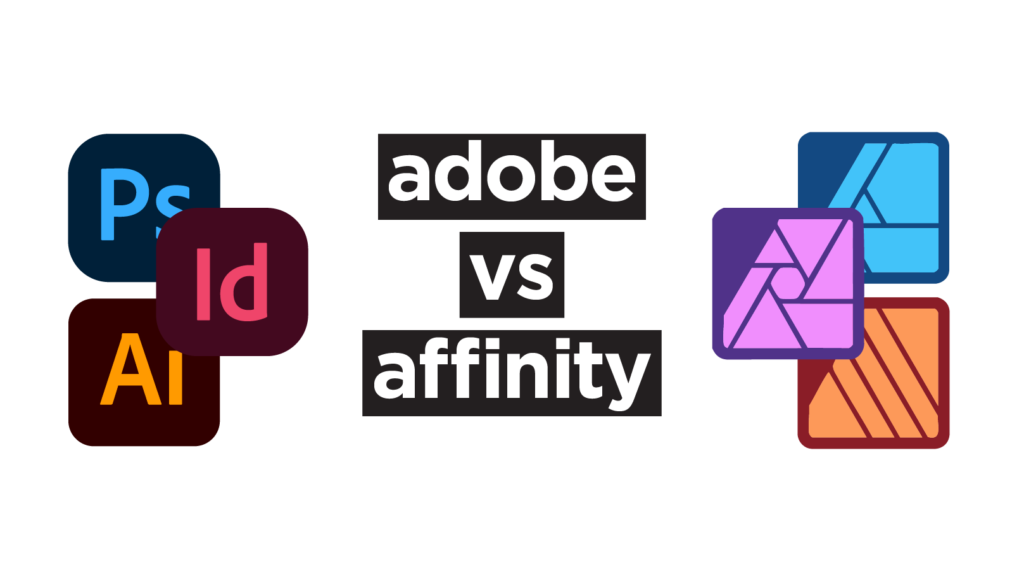
The competition between Adobe Creative Cloud and the Affinity suite is intense among graphic designers, illustrators, and professional photographers. While the American giant is heavily investing in artificial intelligence, its challenger is offering a fundamentally different approach. Which ecosystem delivers the best balance of performance and cost efficiency to enhance your workflow? Business model: the end of the Adobe subscription? The first key factor is unsurprisingly budget. Adobe Creative Cloud relies on a monthly subscription model, which can quickly become expensive for freelance creatives or communication agencies. In contrast, its competitor is disrupting the market with a perpetual license. You purchase the software once and it remains yours permanently, with no hidden recurring fees. For freelancers focused on profitability, the absence of monthly payments is a major advantage. Artificial intelligence vs raw performance The main strength of the established industry leader lies in its advanced technological ecosystem. Tools like Photoshop and Illustrator now integrate Adobe Firefly, a cutting-edge AI technology enabling impressive generative image creation and content filling based on text prompts. Note: If your workflow heavily depends on AI automation and fast prompt-based editing, the Adobe ecosystem currently maintains a clear advantage. However, the Affinity suite (Photo, Designer, and Publisher) counters with outstanding technical optimization. Built without decades of legacy code, these applications are extremely lightweight, fast, and smooth, even on mid-range hardware. Their approach to combining vector and raster editing within the same document is also significantly more efficient. Compatibility and production workflows The final choice largely depends on your working environment: In, short, if your work relies on cutting-edge AI tools, automation, and advanced video or 3D features, a subscription-based ecosystem remains the most complete option. However, if your priority is efficient, cost-effective graphic design, the non-subscription alternative stands out as a highly powerful solution.
How to design a strong logo for your brand?
A logo is a fundamental pillar of your visual identity. This graphic symbol embodies the essence of your company. It captures your target audience’s attention within seconds. Therefore, it must be designed with great care. Opting for graphic simplicity First, a clean design greatly improves memorability. People retain simple shapes much more easily. You should therefore remove all unnecessary details. Avoid complex shadows or overly heavy gradients. Ultimately, an effective logo communicates a clear message at a single glance. This clarity immediately strengthens your brand’s impact on the audience. Ensuring design versatility A visual identity appears across a wide range of media. It is displayed both on large advertising billboards and on small smartphone screens. It also needs to adapt to printed formats such as business cards. When designing a strong logo, you must test its readability at reduced sizes. You should also check how it looks in black and white. A successful symbol retains its strength even without its original colors. Choosing strategic colors Colors convey immediate emotions. For example, blue evokes security and trust, while red suggests energy and passion. It is best to limit your palette to two or three colors maximum. This restraint ensures visual harmony and consistency. Typography also plays a crucial role. Choose a legible font that accurately reflects your business identity. Ensuring long-term relevance Graphic trends change every year, but a company’s identity often lasts for decades. You should therefore avoid short-lived design trends. Instead, prioritize a timeless style. A stable and consistent visual identity helps build long-term customer loyalty. Every step should be carefully planned to design an effective and lasting logo.
Visual identity: the detail that makes the difference
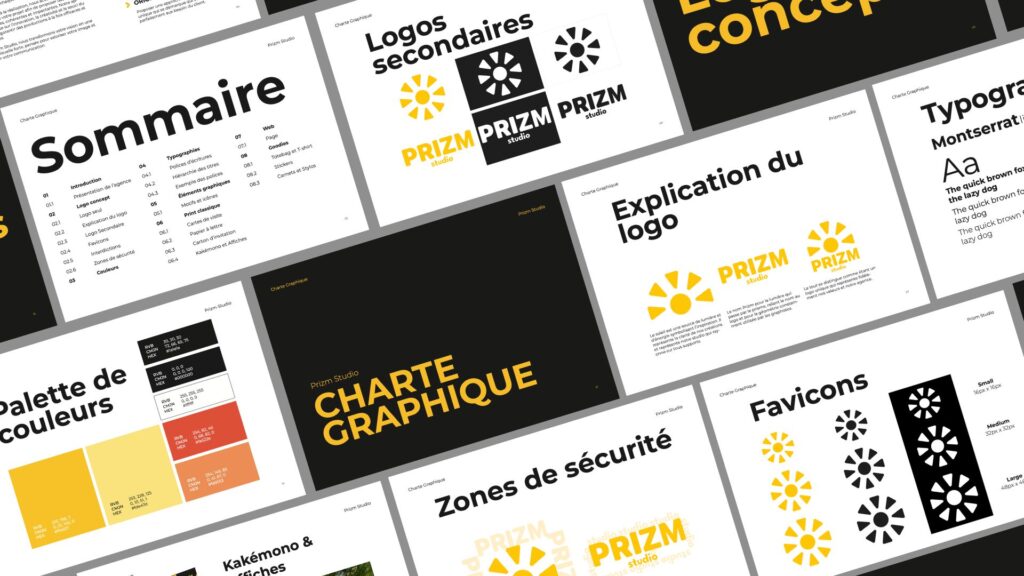
Today, a company’s image is a key factor in its success. Before even discovering a product or service, customers perceive a brand through its visual universe. That is why creating a professional brand style guide and a consistent visual identity has become essential for any company looking to increase its visibility and strengthen its credibility. At Prizm Studio, a graphic design and visual communication agency, we help brands build strong and memorable identities. What’s a visual identity ? A visual identity brings together all the graphic elements that define a brand: logo, colors, typography, iconography, visual style, and communication materials. These elements help create a recognizable and professional image across all communication channels, whether on a website, social media, advertising campaigns, or printed materials. The brand style guide, in turn, serves as a framework to ensure visual consistency across all media. It precisely defines the rules for logo usage, color palettes, typography, and layout styles. A company with a consistent visual identity naturally inspires greater trust and professionalism in the eyes of its clients and partners. Creating a consistent brand image Beyond aesthetics, visual identity also plays a strategic role in search engine optimization (SEO) and online visibility. A strong brand improves recognition among internet users, increases time spent on a website, and encourages engagement on social media. All of these factors indirectly contribute to a website’s SEO performance. A professional visual universe also enhances user experience, which is an important ranking factor for search engines like Google. For fast-growing companies, having a complete brand style guide also represents a significant time-saving advantage. All employees and partners have a clear framework for creating consistent and professional content, without the risk of visual inconsistency. At Prizm Studio, we create tailor-made visual identities adapted to the needs and objectives of each brand. Our expertise in graphic design and visual communication allows us to design unique universes aimed at improving brand awareness, credibility, and digital visibility for companies. Creating a strong visual identity is not just about having a nice logo: it is about building a durable, consistent, and high-performing brand image to support long-term business growth. Discover our visual identity projects ⬇️
Technical breakdown: the art of cutting precisely for your production 🎬
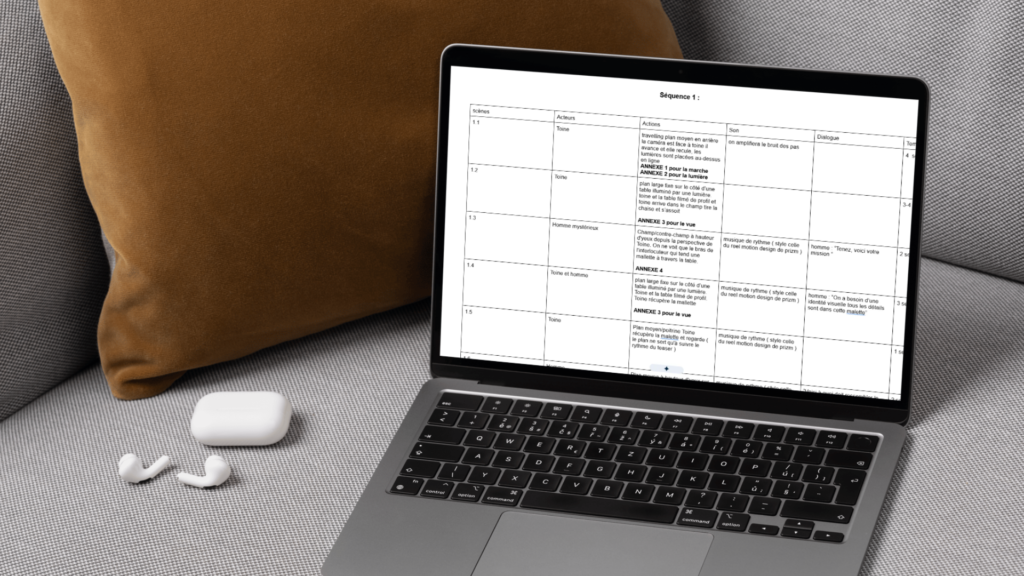
Have you ever dreamed of reading your favourite director’s mind during a shoot in order to understand just how complex it really is? That level of clarity on a set is not an illusion. From the pre-production stage onward, the technical breakdown is the decisive step that will radically transform the way you design a video. Imagine yourself on location, surrounded by an entire crew or a client waiting impatiently for your instructions. This strategic audiovisual production document acts as the ultimate roadmap for your content creation project. This preparation does not simply list a sequence of shots in a mechanical way; it removes the creative blur that separates your idea from the final image. You are no longer reading a linear script—you are finally visualising the rhythm of your film scene by scene. To build it, you must translate your entire script into extremely precise visual and sound cues. You rigorously define every aspect of framing, camera movement, and the exact placement of sound equipment. This is the moment where you note the smallest staging details, whether it concerns lighting direction or instructions for the actor in order to achieve the right facial expression on camera. Perhaps this is the true strength of professional filmmakers: using meticulous video planning to give themselves the freedom to become fully creative again on the day of the shoot. Now that our vision is fully structured and our storyboard is complete, let’s move up a gear and see how to condense all that energy into the design of a powerful teaser.